
For children & teens
Orthodontics for children and teenagers in Frankfurt-Süd Sachsenhausen
Individual, child-friendly treatment with very light forces and functional methods. We use the right moment and work with your child's growth.
★ over 70 Google reviews
Specialist Orthodontist
◍ Private rooms
Your dentist has found a misalignment – and now the questions start. Is it really necessary? Will it hurt my child? How long will it take? As an orthodontist in Frankfurt-Sachsenhausen, Dr Jelena Schmitz has been treating children and teenagers for over twenty years. On this page we answer your questions – open and in plain language.
More about the practice
More about the practice
The right moment makes the difference
Early treatment · around 7–8 yrs
Not every child needs orthodontic treatment at a young age – most seven- and eight-year-olds do not. With a crossbite, an open bite, obstructed eruption, pronounced crowding or a very large overjet, an early start is worth it, though: an obstacle to growth that is removed now often saves the major treatment later.
Main treatment: usually from the 10th year of life
The most common starting point. Diagnoses include crowding, a deep bite, a large overjet, a crossbite, an open bite or missing tooth buds.
Making use of growth
The strongest growth phase falls around the 11th to 12th year of life in girls and around the 13th to 14th year of life in boys. During this developmental phase, light forces are enough for large corrections.
How do you recognise a misalignment?
Signs you can look out for
Crooked or crowded teeth · teeth that protrude or sit too far back · thumb sucking beyond the third year of life · difficulty biting and chewing · grinding · mouth breathing instead of nasal breathing.
Not sure? A short check-up with an orthodontist gives you clarity – with no obligation at all.
Not sure? A short check-up with an orthodontist gives you clarity – with no obligation at all.
Common misalignments
Crossbite
Deep bite
Open bite
Crowding
Overjet
Displaced canines
Missing tooth buds
◍ How we go about it
Correcting gently – with growth
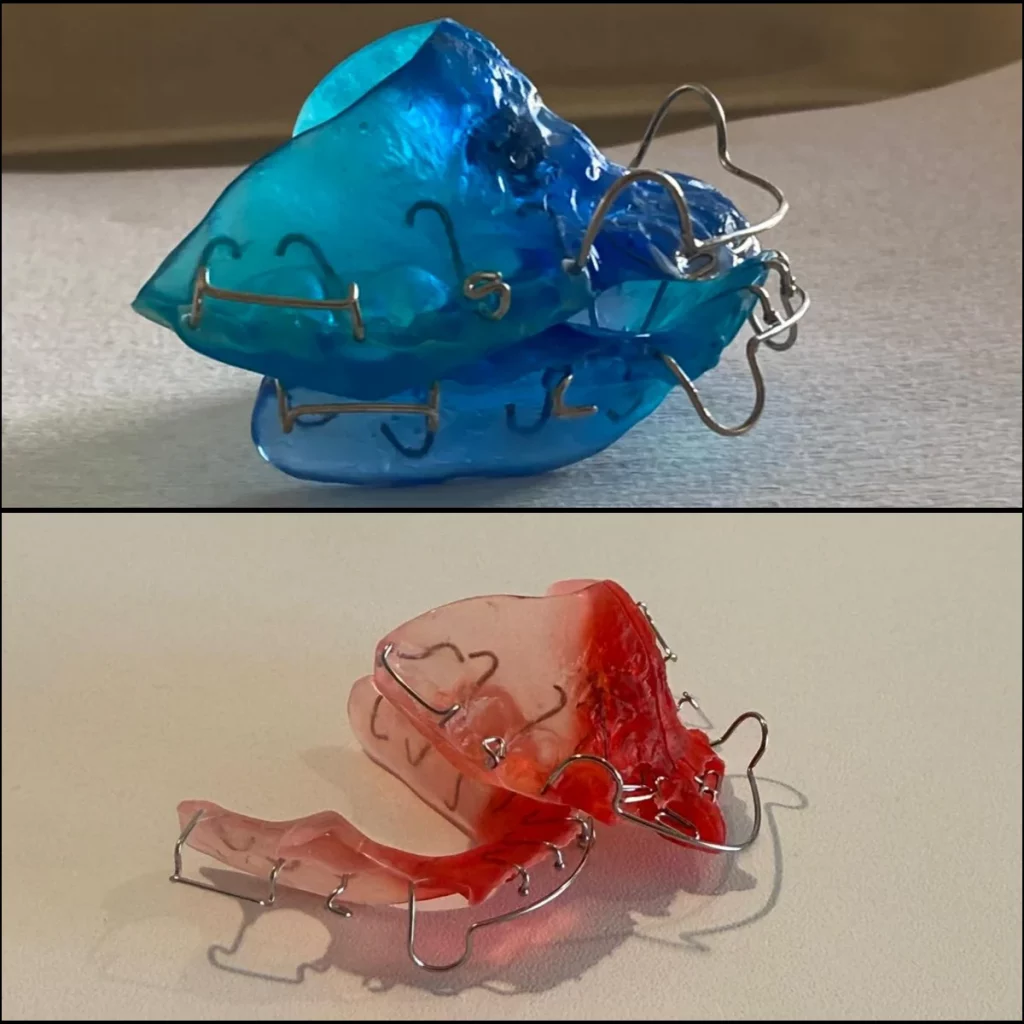
We use functional orthodontic appliances to reshape the jaw by changing the movement pattern of the muscles. In growing patients, new bone forms. This allows a relaxed lip seal and encourages nasal breathing. The results stay stable long term.
For your child that means less strain, fewer appointments and usually a shorter course of treatment.
Changing muscle function
Jaw reshaping
Relaxed lip seal
Nasal breathing
stable result
Your path – step by step
1
Diagnosis and treatment plan
Precise analysis, an individual plan, clear information about costs.
2
Active treatment
Mostly beginning with removable functional orthodontic appliances, followed by correction of the tooth position with fixed braces.
3
Stabilisation
We secure the treatment result so that it holds long term.
Around two years in many cases
Because we work with growth, the goal is often reached within around two years – even with demanding findings. That means a shorter course of treatment and fewer appointments for your child. The actual duration depends on the individual findings.
Get an estimate of treatment time for your child
No obligation · Consultations on Tuesdays from 5 pm
€ Costs and health insurance
What does health insurance pay for your child?
Where a misalignment needs treating – from KIG grade 3 upwards – health insurance covers the greater part of your child's treatment. What that means for you specifically is something we explain to you in person after the examination, before anything begins. And you will not get a proposal from us that goes beyond what genuinely helps your child.
KIG classification
Covered by health insurance
No overtreatment
No fear of the brace
For many children the first appointment is more nerve-racking than anything that follows.
That is why we take our time: we explain every step in a way children understand, show them the appliances and answer every question – including the ones adults would not ask.
Treatment takes place in a bright room of its own. No rush, short waiting times. Children who feel safe cooperate better – and you can see that in the result.
That is why we take our time: we explain every step in a way children understand, show them the appliances and answer every question – including the ones adults would not ask.
Treatment takes place in a bright room of its own. No rush, short waiting times. Children who feel safe cooperate better – and you can see that in the result.
A treatment room of your own
Short waiting times
A sensitive team
Multilingual
Results from our practice

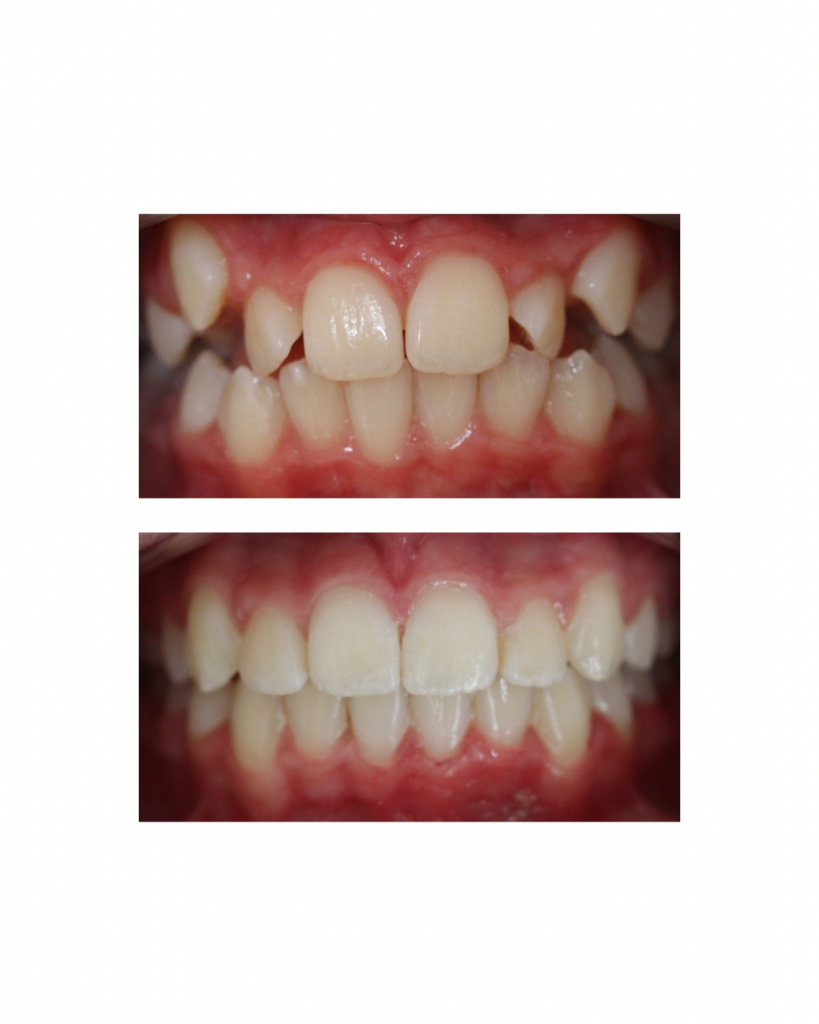

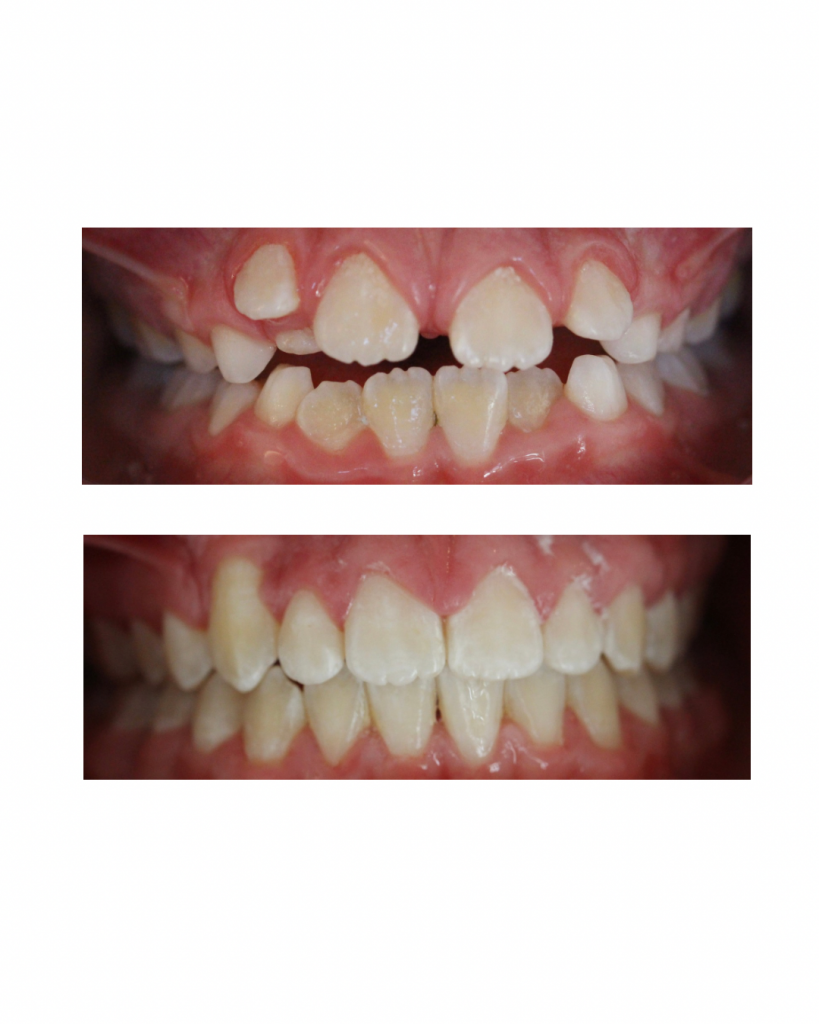
For each case: findings and treatment duration · published with consent
What parents say about us
Frequently asked questions from parents
Does the treatment hurt?
We work with light forces. After an appliance is fitted or adjusted, there is usually only a brief feeling of pressure.
How long does the treatment take?
Around two years in many cases – but that depends on the findings. After the examination we can give you a reliable estimate.
How often do we have to come in?
Usually every six to seven weeks. We plan appointments as efficiently as possible.
At what age does a first appointment with an orthodontist make sense?
A first check-up makes sense from the 7th year of life. Most children of seven or eight do not need treatment yet, though – we are only looking at whether and when something needs doing.
Can my child still eat everything and play sport?
Yes, with a few pointers. We explain in detail how the brace is looked after and what to watch out for.
At what age does a first appointment make sense?
A first check-up from around the age of 7 is ideal.
Do we need a referral from the dentist?
No. You can book an appointment with us directly. If you do have a referral, feel free to bring it along.
Do teeth have to be extracted for the treatment?
As long as the last milk teeth have not yet fallen out, reserve space is still available to us for positioning all the permanent teeth. If treatment happens in good time, that space is used efficiently and extracting permanent teeth can be avoided.
How quickly can we get an appointment?
As a rule, soon. You can book online or call us.
Is the initial consultation free and without obligation?
Yes. We take our time, look at your child's misalignment of the teeth or jaws and discuss the options calmly – with no obligation.
Do you also speak English?
Yes. Dr Jelena Schmitz trained at the Eastman Dental Institute in London, among other places. Whether she communicates in German or in English makes no difference to her. Our team also speaks Italian, Serbian, Croatian, Turkish and Dutch.
What should we do in a small emergency, for example if a wire is poking?
Just give us a call. For small problems you will get an appointment at short notice.
Let's find the right path for your child
At the initial consultation we look at the situation calmly and answer your questions – free and without obligation.
Consultations on Tuesdays from 5 pm · ☎ +49 69 66129982